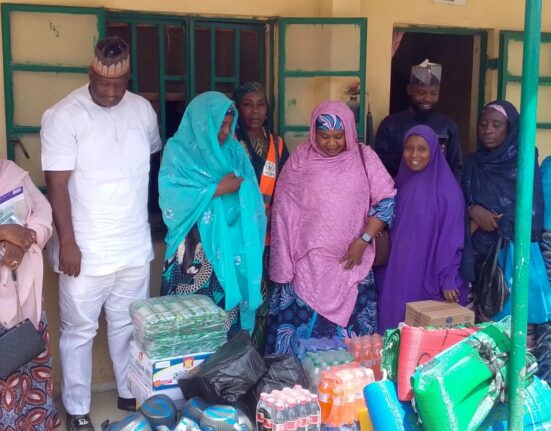

The International Committee of the Red Cross (ICRC) has raised the alarm over worsening malnutrition in northeastern Nigeria, reporting an 18 per cent increase in cases treated at health facilities it supports, as the world prepares to mark World Food Day on October 16.
According to the ICRC, admissions at six health centres and four hospitals supported by the organisation rose from approximately 17,000 between January and September 2025 to nearly 20,000 during the same period in 2026.
Aliyu Dawobe, the ICRC Communication Officer Abuja Delegation in a statement sent to GLOBAL TRACKER said the increase highlights the growing food and nutrition crisis affecting vulnerable communities, particularly young children, pregnant women and breastfeeding mothers, who face heightened risks from inadequate food and poor nutrition.
In Mubi, Adamawa State, the situation is even more concerning, with malnutrition cases increasing by approximately 24 per cent, from 4,600 to 5,700 over the period under review.
The figures were released on October 15, a day before World Food Day, which is observed annually to raise awareness about hunger, food security and the need to ensure access to safe and nutritious food.
The 2026 observance comes amid growing concerns about food insecurity in Nigeria, where more than 34 million people are projected to face insufficient food supplies during the year, according to the food security analysis cited by the ICRC.
The organisation warned that conflict, climate shocks and economic pressures continue to undermine people’s ability to produce, purchase and access adequate food, worsening the nutritional conditions of already vulnerable households.
In northeastern Nigeria, years of armed conflict have disrupted farming activities, displaced communities and weakened livelihoods, leaving many families struggling to feed themselves.
The impact is particularly severe among children under five, whose nutritional needs are critical for healthy growth and development.
At the Mubi Stabilization Centre, Zulaihatu Mohammed is seeking treatment for her six-month-old twin daughter, Huseina, whose health has deteriorated since birth.
“When I gave birth to them, this one was tiny,” she said, describing her daughter’s condition. “She is not feeling well. Since I gave birth to her, she has been unwell.”
The ICRC said its response in the region combines treatment for malnutrition with efforts to strengthen food security and help families become more resilient to recurring crises.
Working with the Nigerian Red Cross Society, the organisation supports 15 primary healthcare centres and four hospitals, reaching more than 200 communities.
Its interventions include providing drought- and flood-tolerant seeds, encouraging crop diversification and promoting maternal and child nutrition.
The organisation also supports the production of Tom Brown, a locally prepared nutritional blend made from ingredients including sorghum, millet, soybeans, groundnuts and moringa.
According to the ICRC, the intervention has helped more than 13,000 young children recover from moderate acute malnutrition.
However, the organisation stressed that treating malnutrition alone would not resolve the crisis without addressing the underlying factors that leave families unable to access sufficient and nutritious food.
Farmers in conflict-affected communities continue to face significant risks while trying to cultivate their land.
Saminu Samiyu Ijaduwa, a farmer, described the dangers confronting agricultural workers in insecure areas.
“Due to the conflict, going one kilometre out of town to farm could be highly risky. You might not return!” he said.
The insecurity, combined with climate-related shocks and economic hardship, has reduced agricultural opportunities and increased pressure on household food supplies.
As World Food Day 2026 approaches, the ICRC’s findings underscore the need for sustained investment in nutrition services, food production, healthcare and livelihood support, particularly in conflict-affected communities.
The organisation’s warning also highlights the importance of protecting civilians, enabling farmers to access their fields safely and ensuring vulnerable families can obtain adequate food.
While World Food Day provides an opportunity to renew global commitments to ending hunger, the rising malnutrition figures in northeastern Nigeria demonstrate the urgent need to translate those commitments into practical assistance for families facing food insecurity.