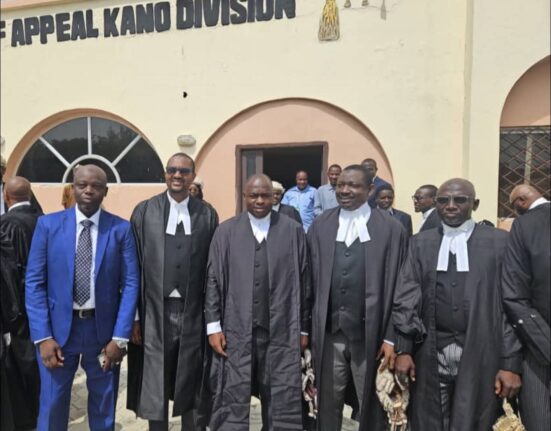


The Supreme Council for Shariah in Nigeria (SCSN) has expressed deep concern over the worsening security situation across the country, calling on the Federal Government to take urgent and decisive measures to address the growing wave of violence, kidnappings, and criminal activities.
In a statement issued by its Secretary-General, Nafiu Baba Ahmad, mni, on June 7, 2026, the Council lamented that Nigerians continue to face daily reports of killings, abductions, terrorist attacks, banditry, and other violent crimes, while official assurances have failed to reflect the realities experienced by citizens.
According to the Council, the country’s security challenges have reached an alarming level, citing recent mass abductions in Borno, Oyo, Niger, and Zamfara states, as well as the kidnapping of a retired Army General and his wife in Katsina State. These incidents, it noted, demonstrate the vulnerability of communities and the growing reach of criminal elements across the nation.
The Council observed that such incidents represent only a fraction of the tragedies confronting Nigerians daily, many of which go unreported. It referenced reports from security monitoring and human rights organisations indicating that thousands of citizens have been killed, abducted, or displaced in recent months, while over 1,000 people were reportedly kidnapped in Northern Nigeria during the first quarter of the year alone.
SCSN expressed disappointment that repeated appeals by traditional rulers, religious leaders, civil society groups, and concerned stakeholders for improved security have largely been met with promises rather than concrete results.
“Nigerians are tired of speeches, promises, condolences, committees, and official rhetoric that are not backed by action,” the statement said. “What the nation urgently requires is decisive action and measurable results.”
The Council emphasized that the protection of lives and property is not a favour granted by government but a constitutional obligation. It argued that those entrusted with leadership must either effectively discharge their responsibilities or make way for individuals capable of doing so.
While criticizing the government’s handling of the security crisis, SCSN commended members of the armed forces and other security personnel for their patriotism, courage, and sacrifices in defending the country under difficult conditions.
The Council also called for greater transparency and accountability in the management of funds allocated to the security sector. It noted that trillions of naira have been spent over the years on defence, intelligence gathering, military operations, security infrastructure, procurement, and logistics, yet insecurity continues to worsen.
“Nigerians deserve to know how these resources are being utilised and why the security situation remains dire despite such massive expenditure,” the Council stated.
Furthermore, SCSN urged the government to adopt bold and innovative strategies to combat insecurity, arguing that conventional approaches have failed to produce the desired results. It recommended the mobilisation of intelligence assets, technology, inter-agency collaboration, community participation, enhanced border security, local intelligence networks, and rapid-response mechanisms to dismantle criminal networks.
The Council warned that Nigeria cannot afford to continue on its current path, stressing that innocent citizens are paying the price for the nation’s security failures. It highlighted the plight of communities living under constant threat, farmers abandoning their farmlands, and travellers uncertain of their safety on the country’s highways.
“The nation demands action,” the statement concluded. “The time for excuses has passed. What Nigerians need now is decisive and competent leadership capable of restoring peace, security, and public confidence.”
The statement was signed by Nafiu Baba Ahmad, mni, Secretary-General of the Supreme Council for Shariah in Nigeria (SCSN).